Dolomite vs quartz countertops comes down to one core trade-off: dolomite is a natural stone prized for one-of-a-kind veining, while quartz is an engineered, non-porous surface that never needs sealing.
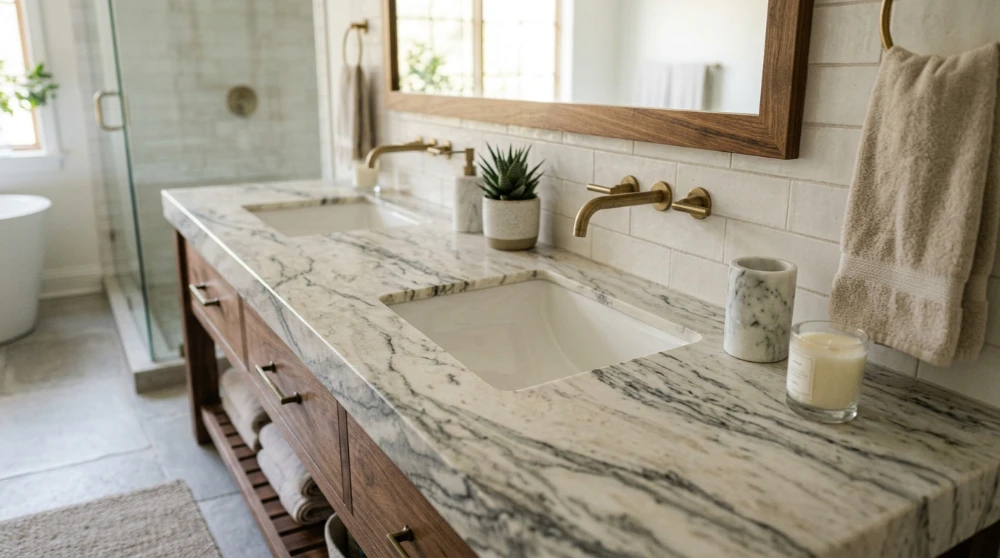
Both are premium, both are beautiful, and showrooms call both “durable”. Here is a side-by-side comparison of durability, maintenance, heat and stain behavior, appearance, and cost so you can choose with confidence.
Dolomite vs Quartz Countertops: A Complete Comparison Guide
Comparing dolomite vs quartz countertops is easier when you focus on five factors: appearance, scratch and chip resistance, heat tolerance, maintenance, and cost. Here’s how they stack up.
| Factor | Dolomite | Quartz |
| Appearance | One-of-a-kind natural veining; marble-like elegance | Consistent patterns; wide color range |
| Scratch & chip resistance | Softer stone; can scratch and chip | Highly resistant to daily wear |
| Heat tolerance | Generally better; still use trivets | Resins can scorch under prolonged heat |
| Sealing | Resealed every 6–12 months | Never needs sealing |
| Cleaning | pH-neutral soap only; acids can etch | Mild soap and a soft cloth |
| Cost | Priced like marble; varies by slab | Varies by brand; no upkeep costs |
Appearance and Style
Style-wise, the choice comes down to natural artistry versus engineered predictability. Dolomite slabs carry one-of-a-kind natural veining in a soft gray-white palette, with no two slabs identical. Quartz delivers engineered consistency plus a wide color range, including patterns that echo natural marble.
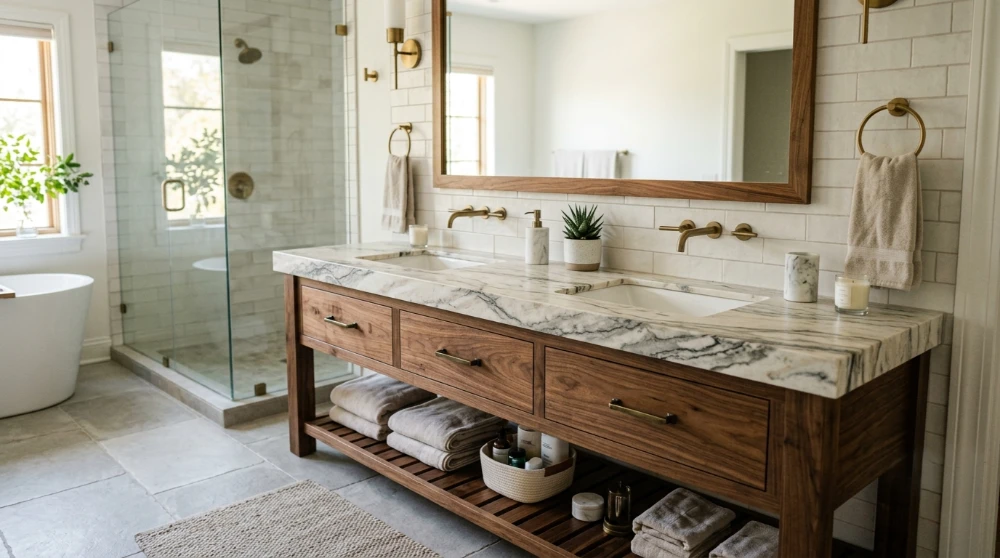
One showroom tip: natural stone can vary from the display sample, while quartz patterns stay predictable. If that appeals, Rock Solid Vanities offers 8 quartz colors:
- Olympia: crisp snow white
- Willow: soft white base with delicate gray veining
- Cascade: off-white with earthy veins
- Nova: sandy with caramel veins
- Shale: gray with brown speckles
- Moondust: warm gray with crystal flecks
- Rapture: warm white with marble veining
- Admiral: white streaks on deep gray
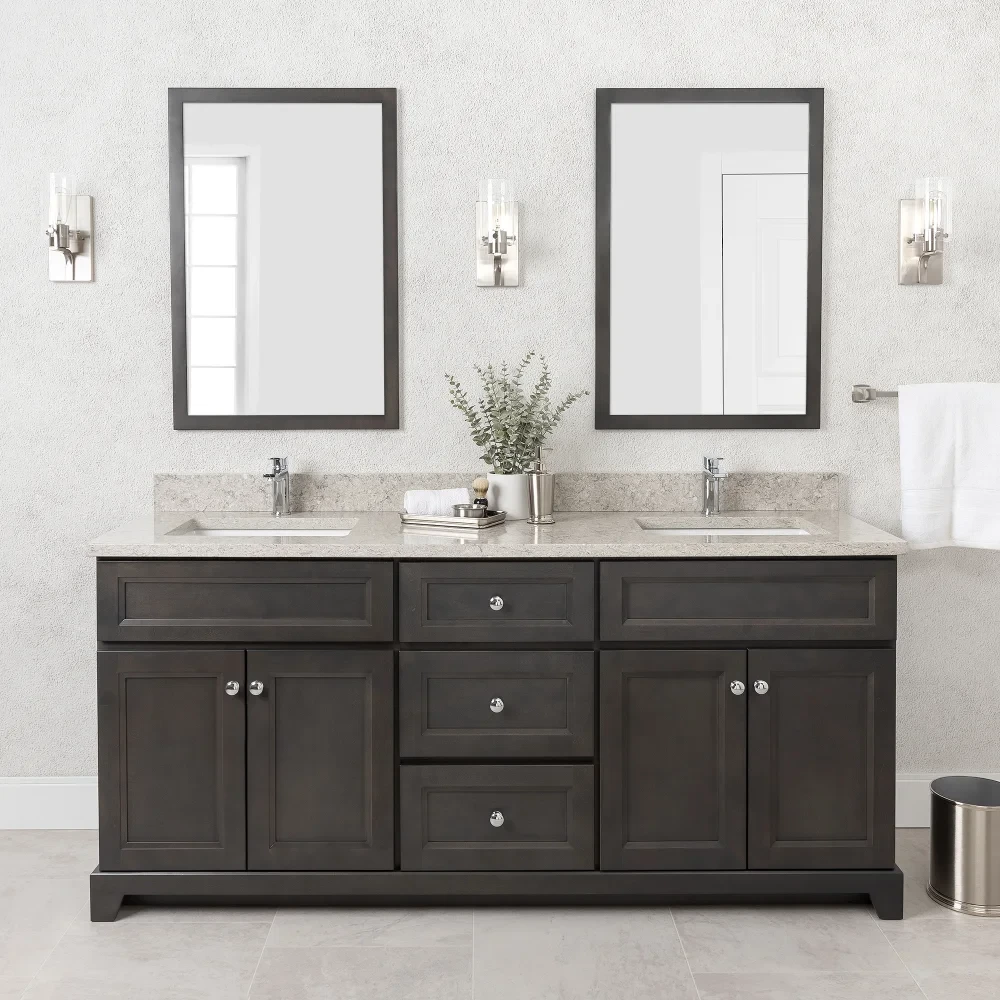
The bridge point: dolomite lovers can capture that marble aesthetic with quartz; our Rapture color is a perfect example, minus the sealing.
Scratch and Chip Resistance
Quartz wins this round for busy households. It’s highly scratch- and chip-resistant, handling dropped toiletries, jewelry, and daily family life. Dolomite is softer, so it can scratch from sharp objects or gritty cleaners, and its edges can chip under impact.
Honest note: no surface is indestructible; quartz can also chip if struck hard on an edge, so treat both with reasonable care.
Heat Tolerance
Here, natural stone holds the edge. Dolomite generally tolerates heat better, though trivets are still the smart move. Quartz contains resin binders that can scorch or discolor under prolonged high heat, so rest hot styling tools on a protective mat.
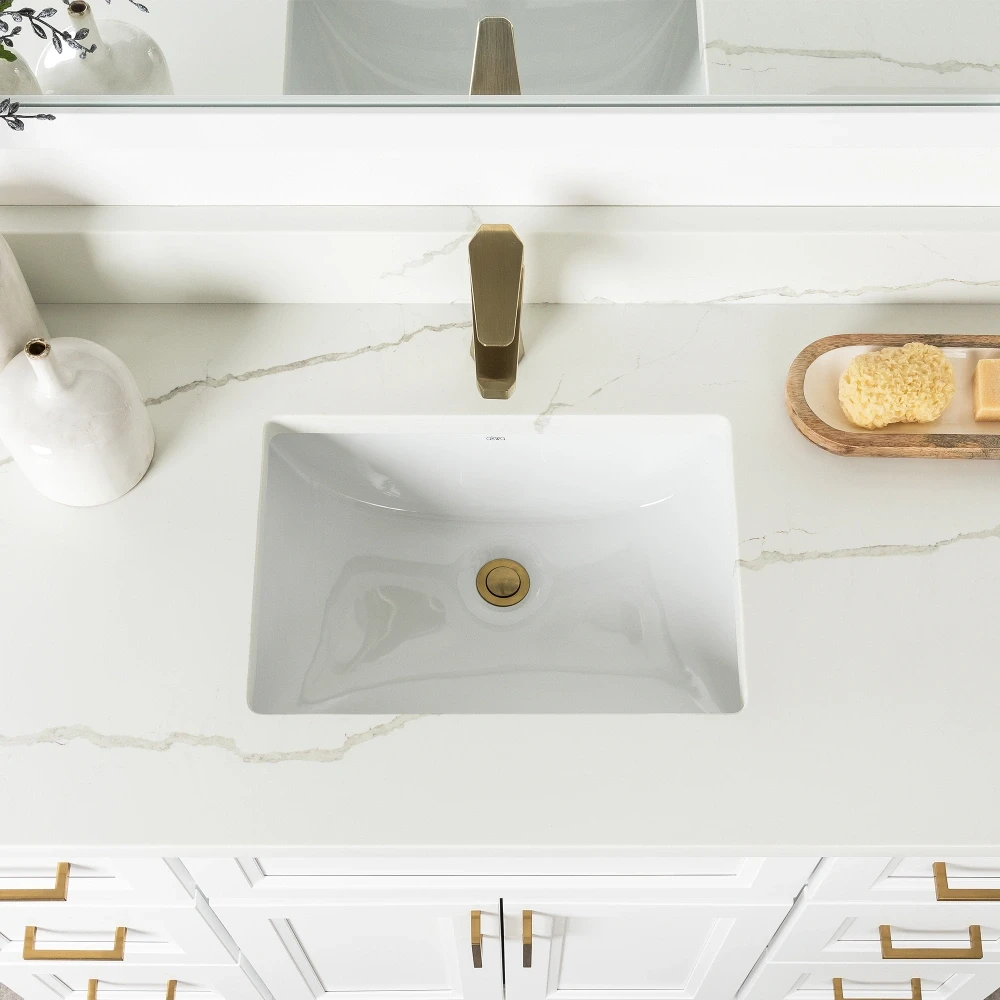
Heat matters less in bathrooms than kitchens, but the curling-iron-on-the-counter habit is real, and worth breaking with either surface.
Maintenance
Upkeep is where they truly part ways.
Dolomite is porous, so it must be sealed at installation and resealed roughly once a year; some pros recommend every 6–12 months in busy bathrooms. Quartz is non-porous and never needs sealing, ever. Our quartz tops are maintenance-free by design.
Dolomite also asks for a stricter routine:
- Use pH-neutral dish soap and water only
- Avoid vinegar, lemon, bleach-based, or abrasive cleaners; acids can etch and dull the polish
Quartz is simpler: mild soap and a soft cloth is all it takes. Use soft microfiber cloths on both, never anything abrasive.
Cost and Value
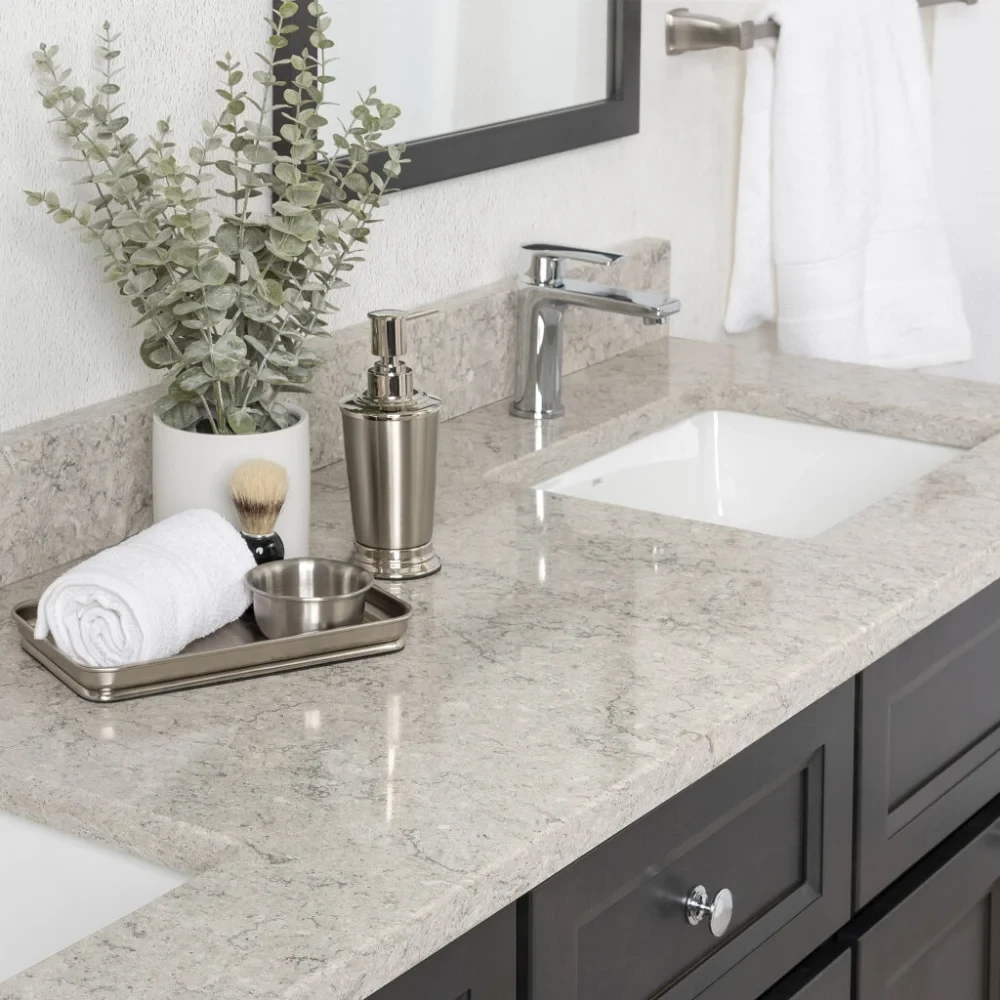
Both are premium, and prices vary widely by region, slab size, color rarity, and fabrication. Dolomite is often priced similarly to marble, sometimes below high-end quartz, sometimes above, depending on the slab. Quartz pricing varies by brand, color line, and thickness.
The smarter comparison is total cost of ownership:
- Dolomite adds periodic sealing costs and possible professional re-polishing
- Quartz upkeep costs nothing but a soft cloth
Vanity tops are smaller than kitchen runs, so premium surfaces often fit the budget more easily than you’d expect. Our honest advice: compare final installed quotes and see options in person.
Dolomite vs Quartz Countertops: Which Should You Choose?
The dolomite vs quartz countertops question comes down to lifestyle, not a single winner, each surface shines in the right home.
- Choose dolomite if you want a one-of-a-kind natural slab, love the marble look, and accept annual sealing and careful product choices
- Choose quartz if you want set-and-forget maintenance, have a busy household, or want maximum stain resistance in a wet room
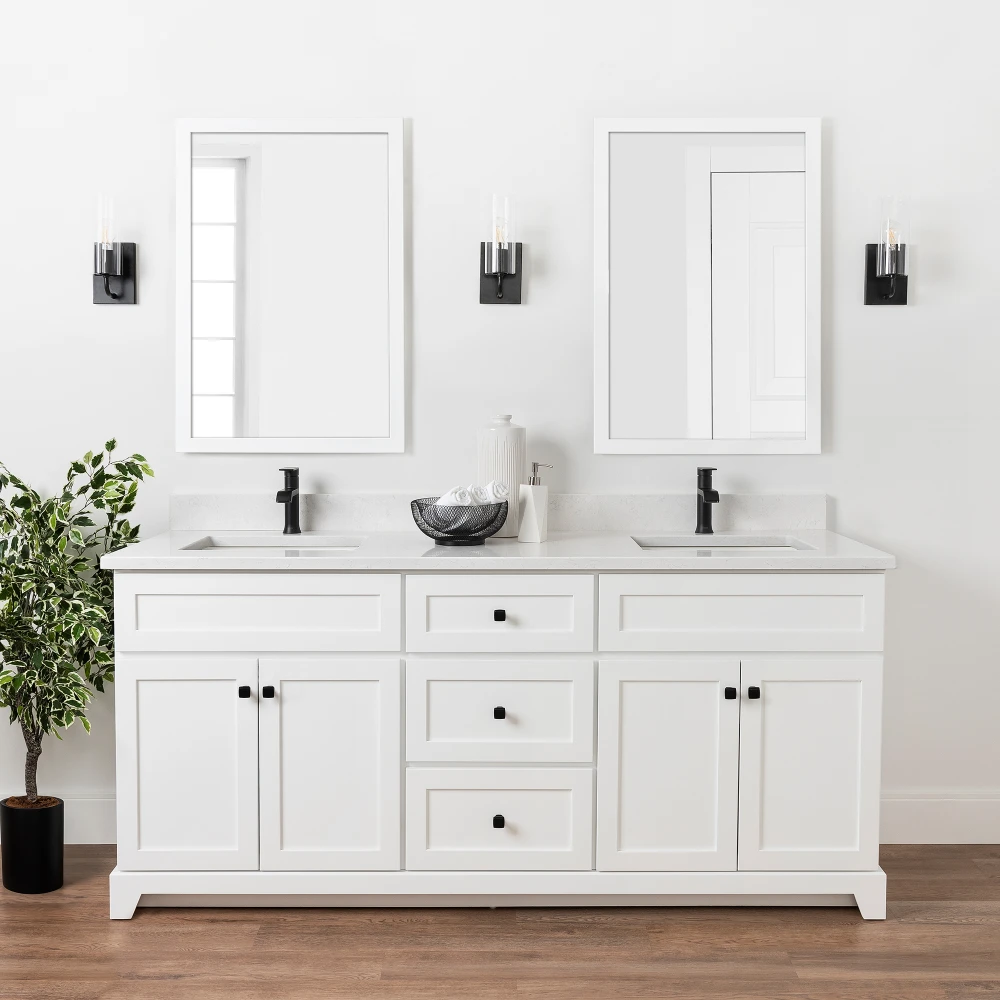
A bathroom reality check: humidity, splashes, cosmetics, and kids make non-porous quartz especially practical for vanities. Our transparent perspective: we offer quartz tops because they balance beauty and durability for real family life, though dolomite shines in the right setting.
Your quick checklist: lifestyle, maintenance appetite, must-have look, budget, and daily users.
Explore Quality Quartz Vanity Tops From Rock Solid Vanities
If quartz won your dolomite vs quartz countertops debate, you’re in the right place. RSV offers hand-built, semi-custom bathroom vanity and quartz countertops, with every piece hand-assembled at our Pennsylvania facility. Our 1¼”-thick quartz tops come in 8 colors of 92% natural quartz, and each includes:
- A white undermount sink, factory-installed with industrial silicone
- A matching 4″ backsplash plus required side splashes
- Your choice of single, 4″, or 8″ on-center faucet drill pattern
Pick your sink style: Classic (traditional deep basin) or Manhattan (modern vertical sides). Every top is non-porous and heat-, scratch-, and stain-resistant; no sealing required.
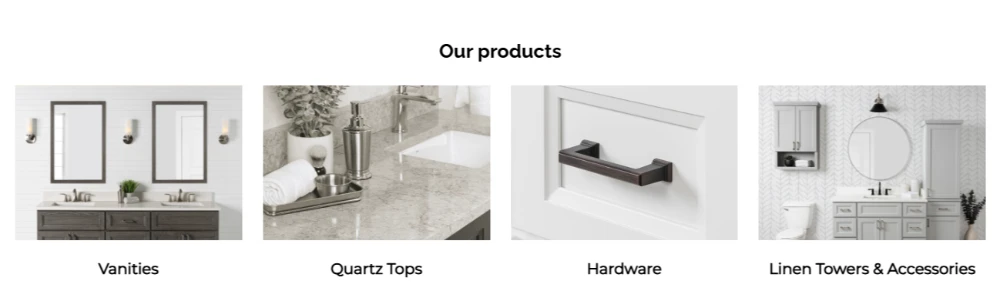
Next, pair yours with our Painted Classic, Stained Classic, Shades of Distinction, or Wire-Brushed Oak collections in standard 22″ or shallow 18″ depths, with multiple hardware styles, plus matching linen towers, mirrors, and medicine cabinets.
Expect your vanity within two to three weeks, and every purchase plants a tree through our Plant-a-Tree Promise. Use our Dealer Locator to find a showroom near you.
Frequently Asked Questions
Here are quick answers to the questions we hear most about dolomite vs quartz countertops.
How do I know when dolomite needs resealing?
Try the water test: sprinkle a few drops on the surface and wait ten minutes. If they absorb and darken the stone, it's time to reseal.
Will coffee, makeup, or toothpaste stain quartz?
No, quartz is non-porous, so everyday culprits sit on the surface and wipe away with mild soap. Blotting spills promptly is still smart.
Can chips or dull spots be repaired on either surface?
Usually, yes. Quartz chips can be filled with color-matched resin, and etched dolomite can often be re-polished, so small mishaps rarely mean replacing the top.
How long do quartz vanity tops typically last?
With basic care, a quality quartz top often lasts 15–30 years, outliving the vanity beneath it. Its non-porous surface won't degrade from moisture.
Where can I find the Bathroom Vanities and Quartz countertops across the US?
You can visit an authorized Rock Solid Vanities dealer or showroom near you. We are now available across states, including Virginia, Tennessee, South Carolina, Pennsylvania, North Carolina, New Jersey, Michigan, Maryland, Illinois, Georgia, Florida, Delaware, and Alabama.
You can simply enter your ZIP code to quickly locate the nearest dealers or showrooms in your area or quickly access to our list below:
Custom Bathroom Vanities and Quartz Tops in Florida
Custom Bathroom Vanities and Quartz Tops in North and South Carolina
Custom Bathroom Vanities and Quartz Tops in Michigan
Custom Bathroom Vanities and Quartz Tops in Maryland
Custom Bathroom Vanities and Quartz Tops in Pennsylvania
Custom Bathroom Vanities and Quartz Tops in Denver
Custom Bathroom Vanities and Quartz Tops in San Antonio