
To maintain the sleek look of your vanity, learning how to polish black quartz countertops effectively is essential because dark surfaces tend to show fingerprints, water spots, and streaks more visibly than lighter ones.
By adopting the right cleaning techniques, you can preserve the luxurious luster without risking damage to the resin binders. This guide covers daily maintenance routines, the right products to use, and common mistakes to avoid for lasting beauty.
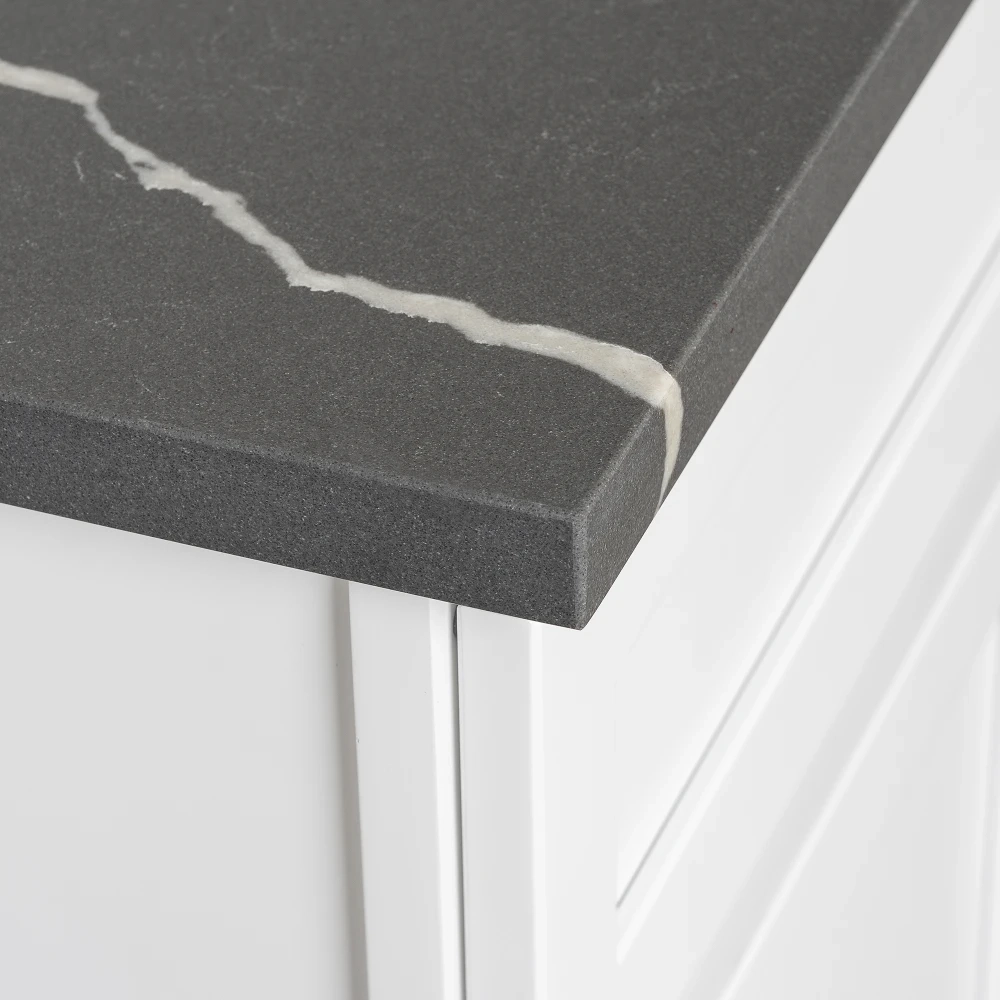
Why Black Quartz Requires Special Attention
Understanding how to polish black quartz countertops requires recognizing that engineered resin binders and dark pigments make the surface highly sensitive to smudges and chemicals.
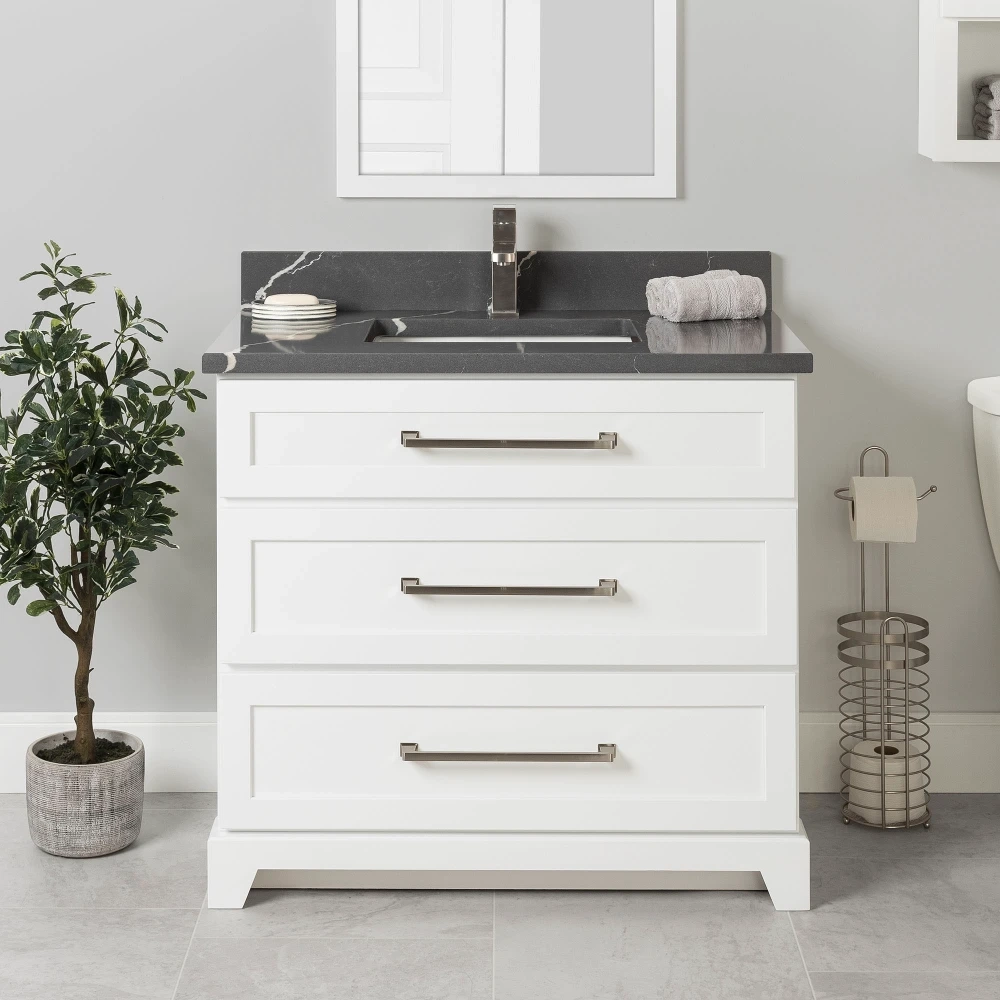
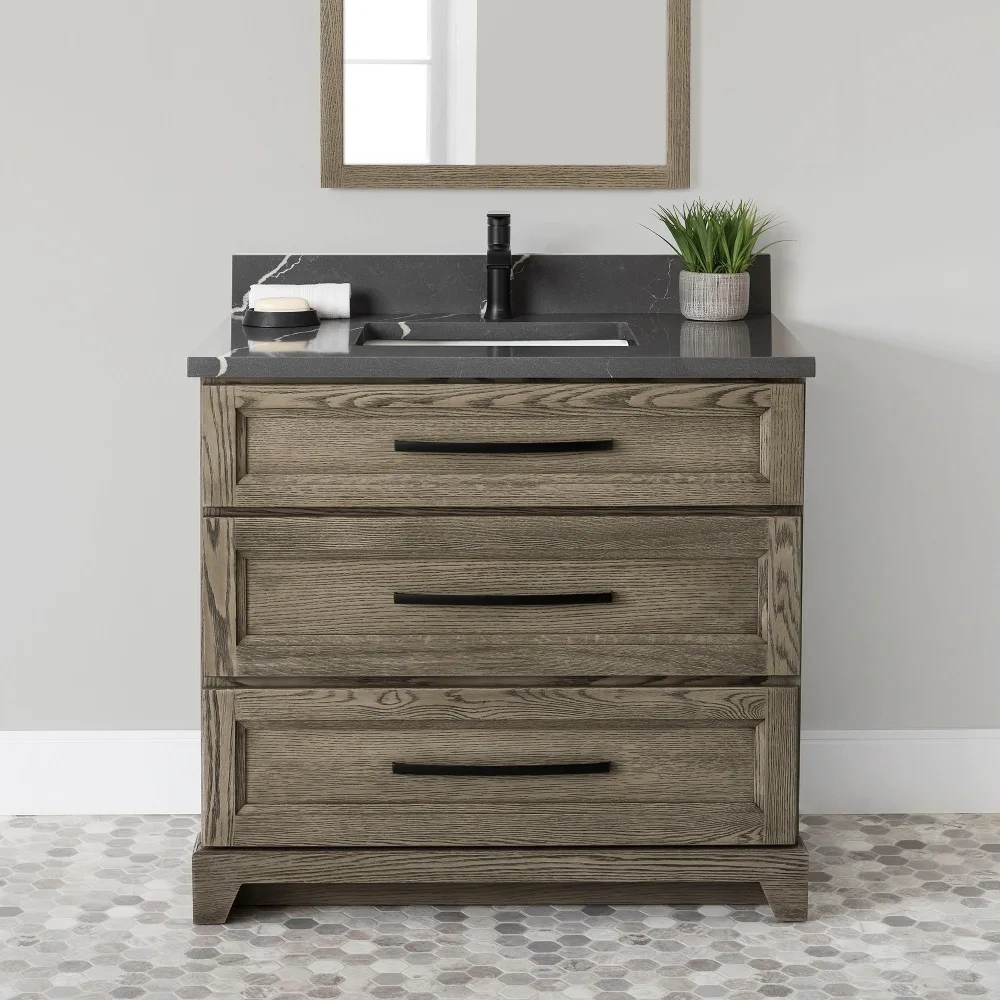
Quartz is an engineered, non-porous stone that requires no sealing, yet the resins can degrade and dull if exposed to high heat or harsh cleaners. Dark designs, like our Admiral color, are particularly unforgiving; their high-contrast, reflective nature highlights dust and water spots more prominently than lighter patterns.
At Rock Solid Vanities, our 1¼” thick quartz vanity tops are factory-polished to a premium finish, and we are here to help you preserve that shine.
The Essential Toolkit for Polishing Quartz
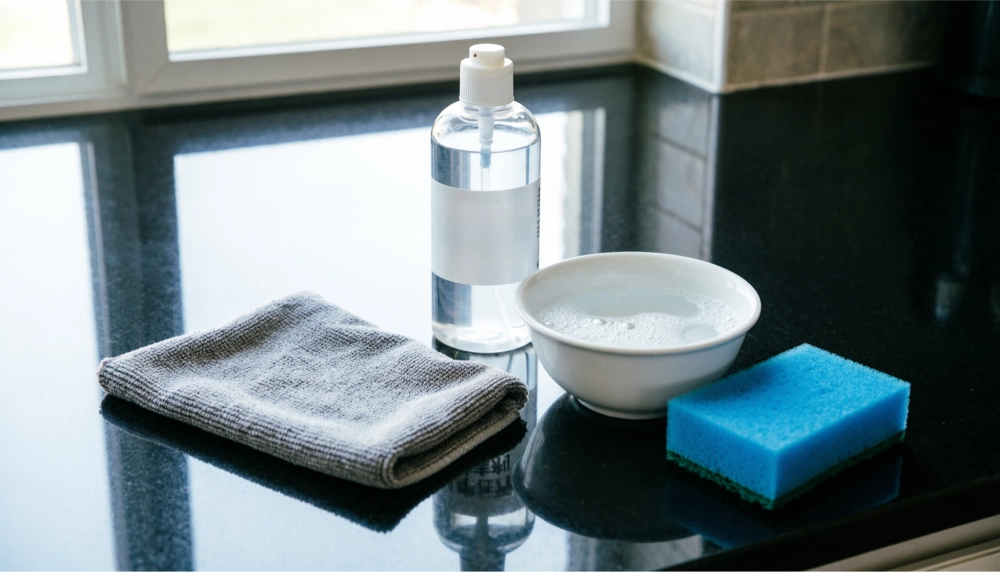
To successfully learn how to polish black quartz countertops, we must assemble a specific set of tools designed to clean without scratching the resin-rich surface. Using the wrong materials is the most common cause of unsightly micro-scratches and dull spots.
You will need:
- Microfiber Cloths: Paper towels might seem convenient, but they can leave behind lint and cause micro-scratches due to their wood pulp content. High-quality microfiber cloths are essential because their split fibers trap dust and buff the surface effectively without abrasion.
- pH-Neutral Cleaners: Harsh chemicals are the enemy of quartz. We recommend specific cleaners designed for stone or quartz that break down grime without stripping the resin sealant or dulling the polish. Always check the label to ensure the product is pH-balanced.
- Warm Water & Mild Dish Soap: For daily polishing, a simple mixture of warm water and a mild, non-bleach dish soap is often the safest and most effective solution. This gentle combination removes surface oils without leaving chemical residues.
- Non-Abrasive Sponges: If you encounter sticky residue, only use soft sponges, like the blue non-scratch side of a kitchen sponge. Avoid the rough green side, as it can permanently dull the sheen.
When we prepare our vanities for shipping, we ensure the surfaces are pristine; keeping them that way requires these simple, household tools. Investing in the right cleaning supplies is the first step toward protecting the beauty of your RSV vanity top.
Step-by-Step Guide to Polishing Black Quartz
We have developed a reliable workflow that protects the integrity of the stone while ensuring a spotless finish. Mastering how to polish black quartz countertops involves a consistent daily routine followed by deeper cleaning methods when necessary.
Daily Wipe-Down Routine
Because water spots dry quickly and become visible on dark surfaces, a daily habit of wiping down the vanity is the best preventative measure.
- Clear the Surface: Start by clearing the countertop of toiletries such as toothbrush holders and soap pumps. This prevents “ring marks” where residue collects under the base of these items.
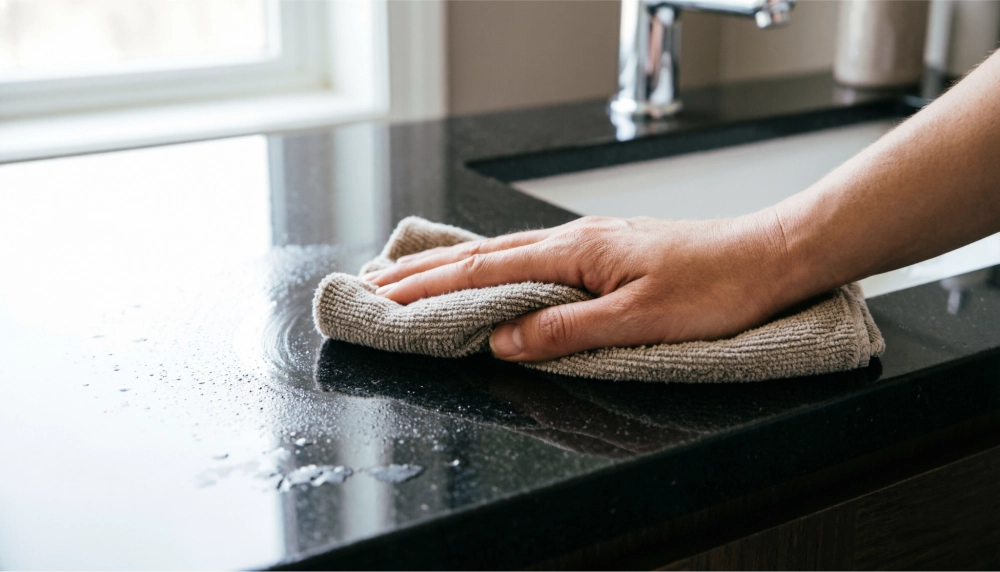
- Wipe Away Residue: Use a damp microfiber cloth with a single drop of mild dish soap to wipe away surface dust and residue. Use gentle pressure to lift oils without spreading them.
- Dry Immediately: This step is non-negotiable for black quartz. Dry the surface immediately with a second dry microfiber cloth to prevent water spots from forming as the water evaporates.
Deep Cleaning and Polishing Techniques
Deep cleaning requires a specific methodology for how to polish black quartz countertops, as the right motion and dwell time can effectively eliminate stuck-on residue without damaging the finish.
Follow these steps:
- Spray a pH-neutral cleaner evenly across the vanity top to prepare the surface for agitation.
- Use a gentle circular motion with a microfiber cloth to loosen sticky residue or dried spots, avoiding any abrasive pressure.
- Employ straight, overlapping strokes to buff the surface dry; this technique is essential for black quartz to prevent visible swirl marks and streaks.
- Remove stubborn hard water spots by letting a cleaner-soaked cloth sit on the area for five minutes to dissolve mineral deposits before wiping.
Common Mistakes That Damage Quartz Finishes
Homeowners often struggle with how to polish black quartz countertops because they inadvertently use abrasive tools or harsh chemicals that degrade the polished sheen. Being aware of these pitfalls can save you from permanent damage.
- Abrasive Scrubbers: Never use steel wool, scouring pads, or abrasive powders like Comet or Ajax. These materials will permanently scratch the polished surface of quartz tops, leaving behind a network of fine scratches that trap dirt and dull the finish.
- Harsh Chemicals: Explicitly avoid bleach, oven cleaners, paint removers, and drain cleaners. These highly caustic substances can discolor the resin, leading to cloudy spots or fading on black surfaces that cannot be wiped away.
- Acidic Cleaners: While natural cleaners like vinegar, lemon juice, or lime juice are popular in many households, they are dangerous for quartz. Acids can break down the resin binders over time, making the surface look dull and susceptible to stains.
- Direct Heat: While quartz is heat resistant to a degree, the resin can scorch. Always use trivets or mats for hot styling tools like hair straighteners or curling irons often found on bathroom vanities. Direct contact with high heat can cause irreversible thermal shock or discoloration.
To keep your surfaces looking pristine and reduce the need for frequent polishing, be sure to read our essential 4 tips for cleaning quartz tops for safe and effective daily care.
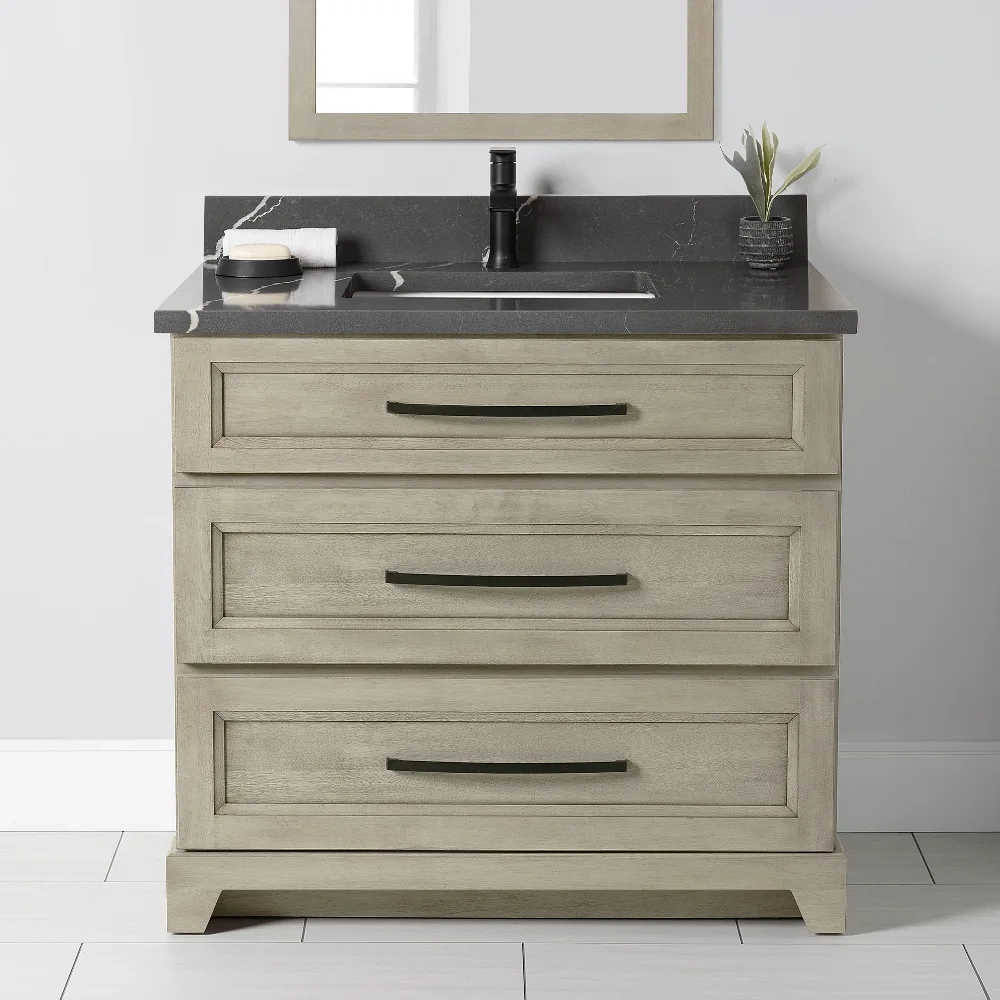
By following this guide on how to polish black quartz countertops, you can protect your investment and keep your bathroom looking pristine. We invite you to explore our Dealer Locator to find a showroom where you can experience the durability and beauty of our quartz tops in person.
FAQs
To further clarify how to polish black quartz countertops, we have answered the most common questions regarding maintenance and product safety.
1. Can I use glass cleaner on black quartz?
It is generally not recommended. Many glass cleaners contain ammonia or other harsh chemicals that can break down the resin binders in quartz over time, leading to a dull finish. Stick to pH-neutral stone cleaners or mild dish soap and water.
2. How do I remove hair dye or makeup stains?
For tough stains like hair dye or makeup, apply a non-abrasive household cleaner to a soft cloth and gently rub the area. If the stain persists, you can use a non-abrasive paste of baking soda and water, applied gently, but avoid scrubbing hard.
3. What is the best way to prevent scratches?
Always use cutting boards for grooming tasks that involve sharp tools and place protective mats under heavy items. While quartz is hard, it is not impervious to damage from diamonds or other quartz crystals.
4. Can I use a Magic Eraser on my black quartz countertop?
Magic Erasers act as mild abrasives that can eventually dull the shiny finish of your quartz surface with repeated use. It is much safer to use a non-abrasive sponge and a dedicated stone cleaner to lift stains without risking the polish.
5. How do I remove dried toothpaste or makeup without scratching?
Place a warm, damp cloth over the dried residue for a few minutes to soften it before attempting to wipe it away. This pre-soaking method allows you to gently lift the spot with a microfiber cloth rather than scrubbing aggressively.