When evaluating sandstone vs quartz countertops for a bathroom, designers overwhelmingly recommend quartz for its superior water resistance and low maintenance.
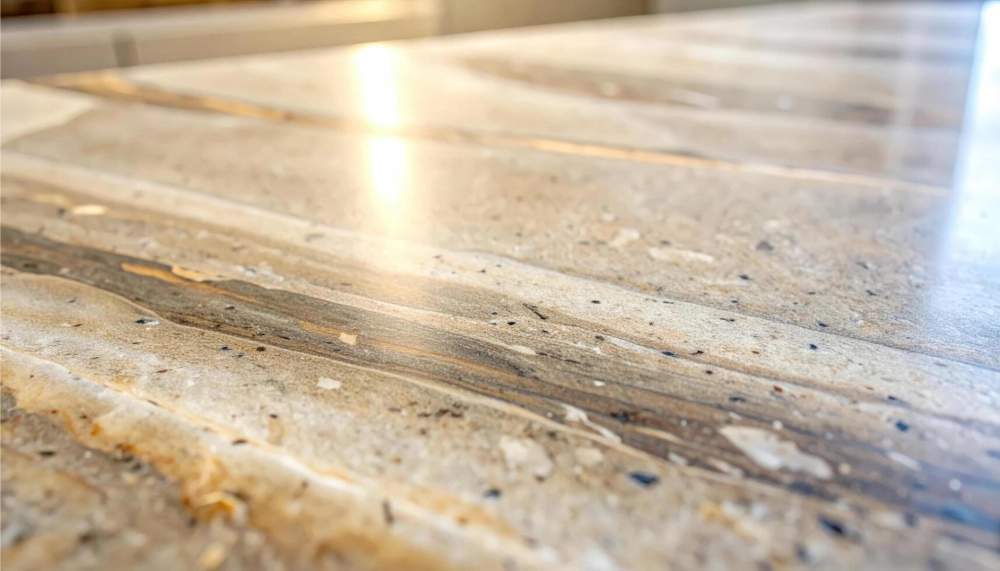
While sandstone offers natural beauty, bathrooms demand surfaces that withstand humidity without constant upkeep. Understanding the differences ensures a lasting investment.
Sandstone vs Quartz Countertops: Origins and Visual Characteristics
The debate over sandstone vs quartz countertops often centers on aesthetics, forcing a choice between the organic layers of natural sedimentary rock and the consistent elegance of engineered stone. Each material establishes a distinct tone for the vanity area.
The Natural Charm of Sandstone
Sandstone is a sedimentary rock composed of sand-sized mineral particles, often quartz or feldspar, creating a unique, earthy aesthetic with layered textures. This natural stone appeals to nature lovers because every slab is distinct.
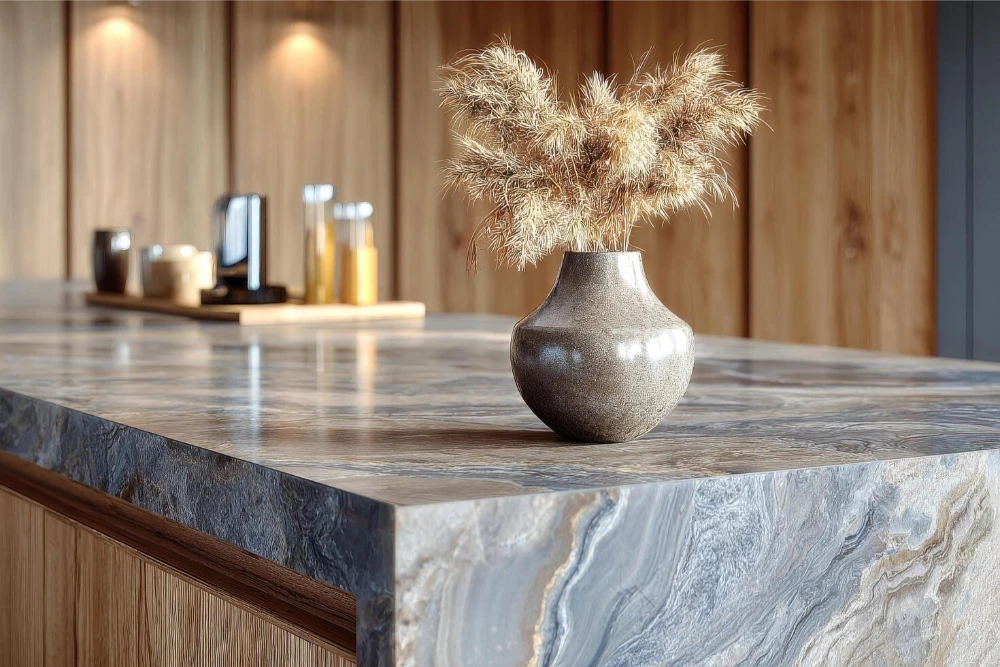
However, these visual characteristics come with natural variations; what appears as texture is actually fissures and pores that define the stone’s rugged personality.
The Engineered Precision of Quartz
Quartz countertops are engineered stone, made from roughly 90% ground quartz and 10% resins and pigments. This process ensures consistency in pattern and color, allowing for predictable design matching in coordinated suites.
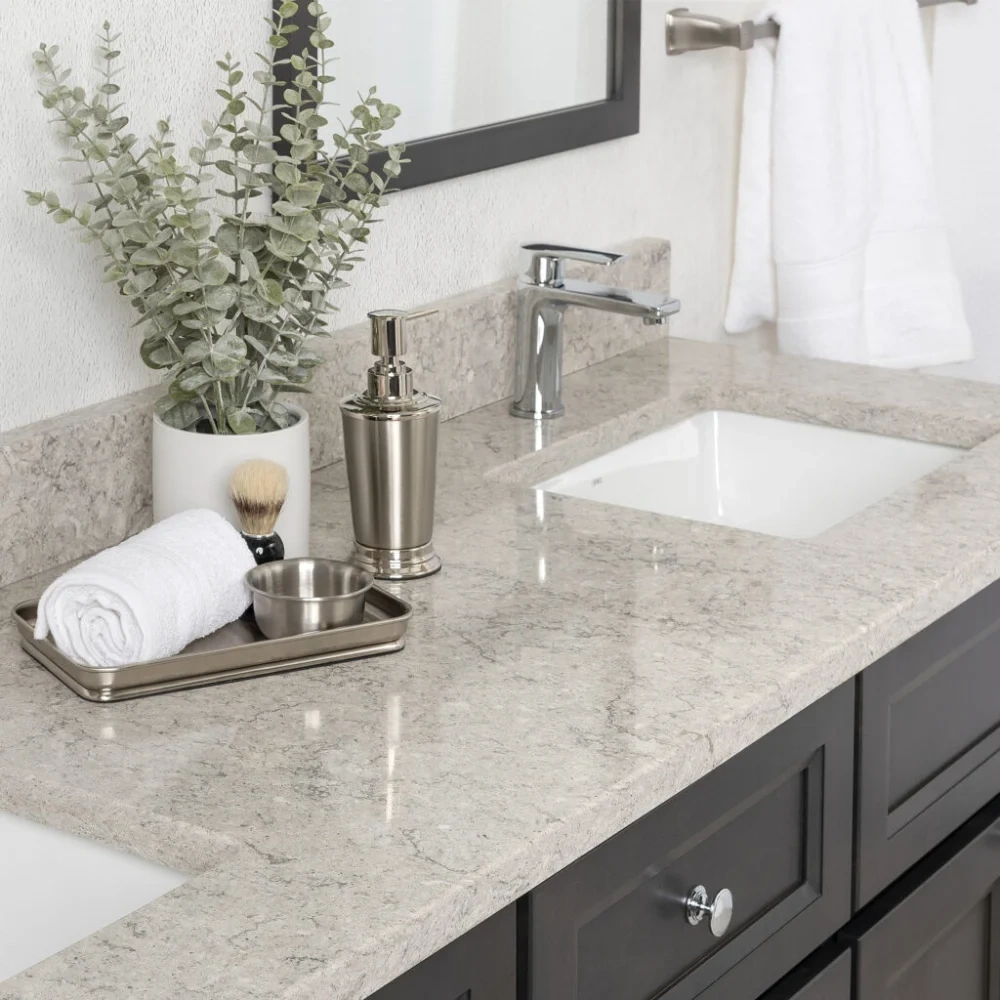
Unlike sandstone, quartz can mimic stones like marble without high maintenance. At Rock Solid Vanities, we utilize this precision to offer quartz tops like our crisp white Olympia or warm Nova, ensuring a perfect match for our semi-custom vanities.
Porosity and Water Resistance: The Critical Bathroom Factor
Evaluating sandstone vs quartz countertops regarding porosity reveals why quartz is superior for wet environments, as its non-porous surface eliminates the water damage risks inherent in natural sedimentary rock.
Sandstone’s Porosity Challenges
As a sedimentary rock, sandstone is inherently porous, meaning it contains tiny interconnected voids that can act like a sponge for water and liquids if not properly sealed.
In a bathroom setting, this characteristic poses significant risks. Water rings from a glass, spilled toiletries, or even constant exposure to humidity can lead to deep absorption.
Over time, moisture trapped within the stone can cause structural degradation or discoloration, compromising both the look and integrity of the vanity top.
The risks extend beyond simple water spots. The pores in sandstone can become breeding grounds for mold and mildew if moisture is allowed to linger.
To combat this, spills must be wiped up immediately to prevent deep absorption. For homeowners who prefer a “set it and forget it” approach, the constant vigilance required to protect sandstone from its own porosity can be a significant drawback.
Quartz’s Non-Porous Advantage
The resin binders in quartz countertops make them non-porous and impervious to water absorption. This creates a hygienic surface that resists bacteria and mold without harsh chemical sealants.
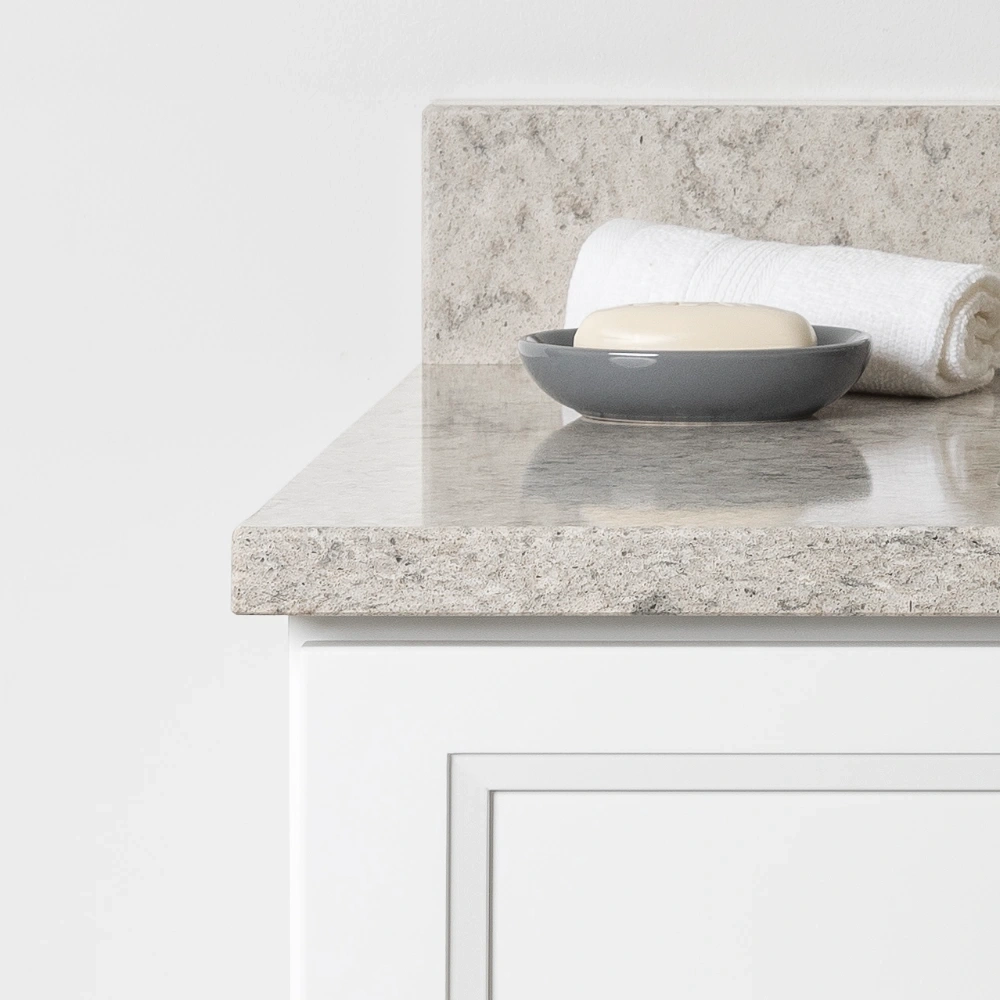
We prioritize this durability at RSV; our quartz tops are designed to withstand daily splashes, ensuring a pristine surface even in active family bathrooms.
- Hygienic Surface: Non-porous quartz prevents bacterial penetration.
- Stain Resistance: Toiletries and makeup wipe away easily.
- No Sealing: Unlike sandstone, quartz never requires sealant application.
Maintenance: Sealing Sandstone vs Caring for Quartz
The maintenance requirements differ significantly in the comparison of sandstone vs quartz countertops, with sandstone demanding rigorous sealing while quartz offers a care-free experience.
The Sealing Routine for Sandstone
Maintaining sandstone is labor-intensive, requiring sealing upon installation and re-sealing every 6 to 12 months.
Without this rigorous schedule, the stone is susceptible to permanent stains from makeup, toothpaste, or hair dyes.
Additionally, sandstone is softer than other stones, making it prone to scratches and chips from heavy bathroom accessories.
- Frequent Sealing: Requires professional or DIY sealing bi-annually.
- Staining: Liquids penetrate quickly if the seal is compromised.
- Physical Damage: Softer composition risks scratches and chips.
The Low-Maintenance Lifestyle of Quartz
Quartz countertops define a “worry-free” lifestyle, requiring no sealing, waxing, or polishing, only simple soap and water cleanup. The material is harder than sandstone, offering superior scratch resistance against daily wear.
Rock Solid Vanities enhances this durability with premium 1¼” thick quartz tops, providing a substantial, high-end feel that stands up to daily life.
| Related reading: |
Price vs Performance: Which Countertop Offers Better ROI?
Analyzing the value of sandstone vs quartz countertops requires looking beyond the sticker price, as the return on investment for quartz is often higher due to its longevity and minimal lifetime cost.
Initial Price vs Lifetime Cost
Sandstone can be cheaper per square foot initially, but it incurs expensive ongoing maintenance costs for sealers and potential professional restoration.
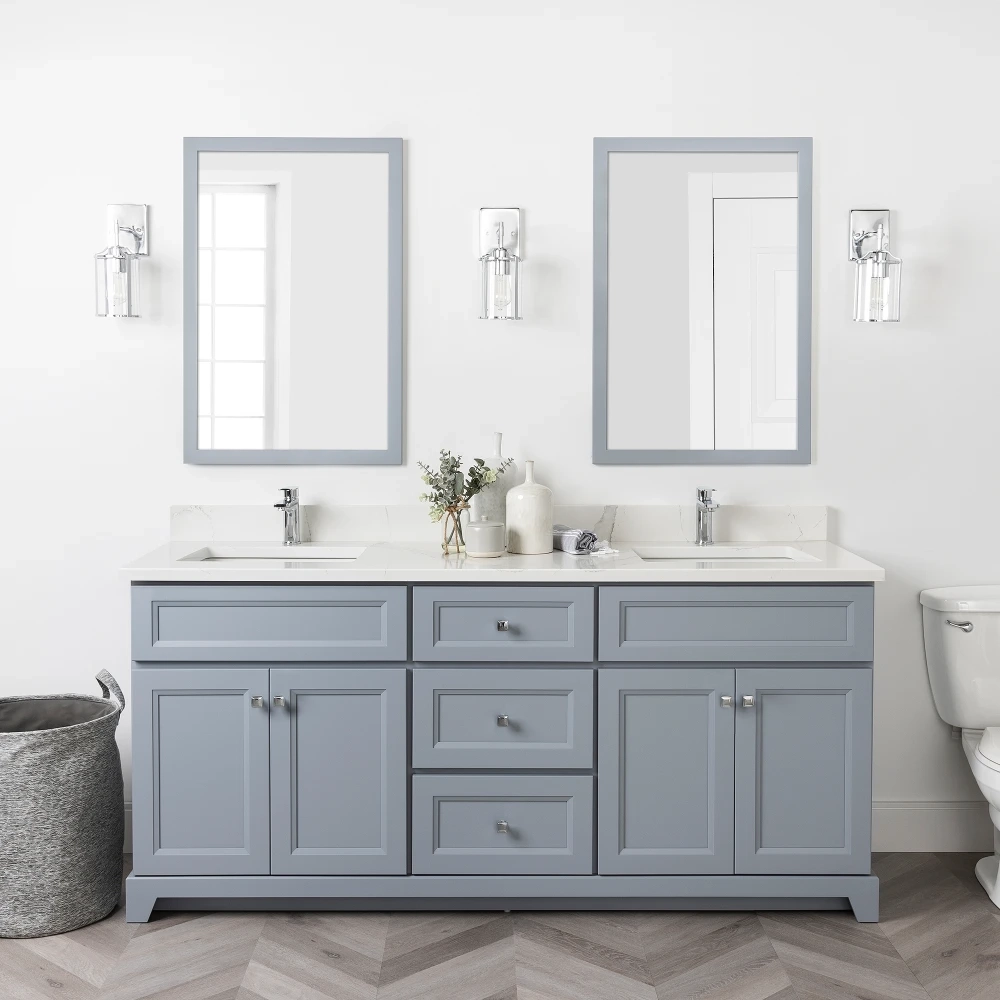
Quartz may have a higher upfront price, but its zero-maintenance nature provides a better long-term investment. RSV optimizes this value by bundling high-quality quartz tops with our vanities, ensuring a perfect fit without the waste of slab fabrication.
Impact on Home Value
Modern homebuyers increasingly prioritize low-maintenance features, and quartz countertops are often a sought-after upgrade that can boost a home’s resale value. The presence of a durable, hygienic quartz vanity top signals to buyers that the bathroom is modern and ready to use.
Conversely, natural sandstone can be a polarizing choice; while some appreciate its look, many buyers are wary of the maintenance responsibilities associated with porous natural stone.
Comparison Overview:
| Feature | Sandstone | Quartz (RSV Standard) |
| Material Type | Natural Sedimentary Rock | Engineered Stone (90% Quartz + Resin) |
| Porosity | Highly Porous | Non-Porous |
| Sealing Required | Yes, every 6 – 12 months | Not necessary |
| Maintenance | High; immediate wipe-ups, special cleaners | Low; soap and water |
| Durability | Prone to scratching and chipping | Highly scratch and chip-resistant |
| Water Resistance | Low (absorbs water) | High (impervious to water) |
| ROI | Variable; maintenance costs reduce value | High; durability appeals to buyers |
If you are leaning toward an engineered surface but still want to explore how it stacks up against other premium natural stones, check out our in-depth comparison on quartz vs marble countertops to ensure you make the perfect choice for your remodeling project.
Ready to Upgrade? Find Your Dream Vanity Top Today
While sandstone offers natural beauty, the comparison of sandstone vs quartz countertops proves quartz is the superior choice for bathrooms due to its non-porous nature, stain resistance, and minimal maintenance.
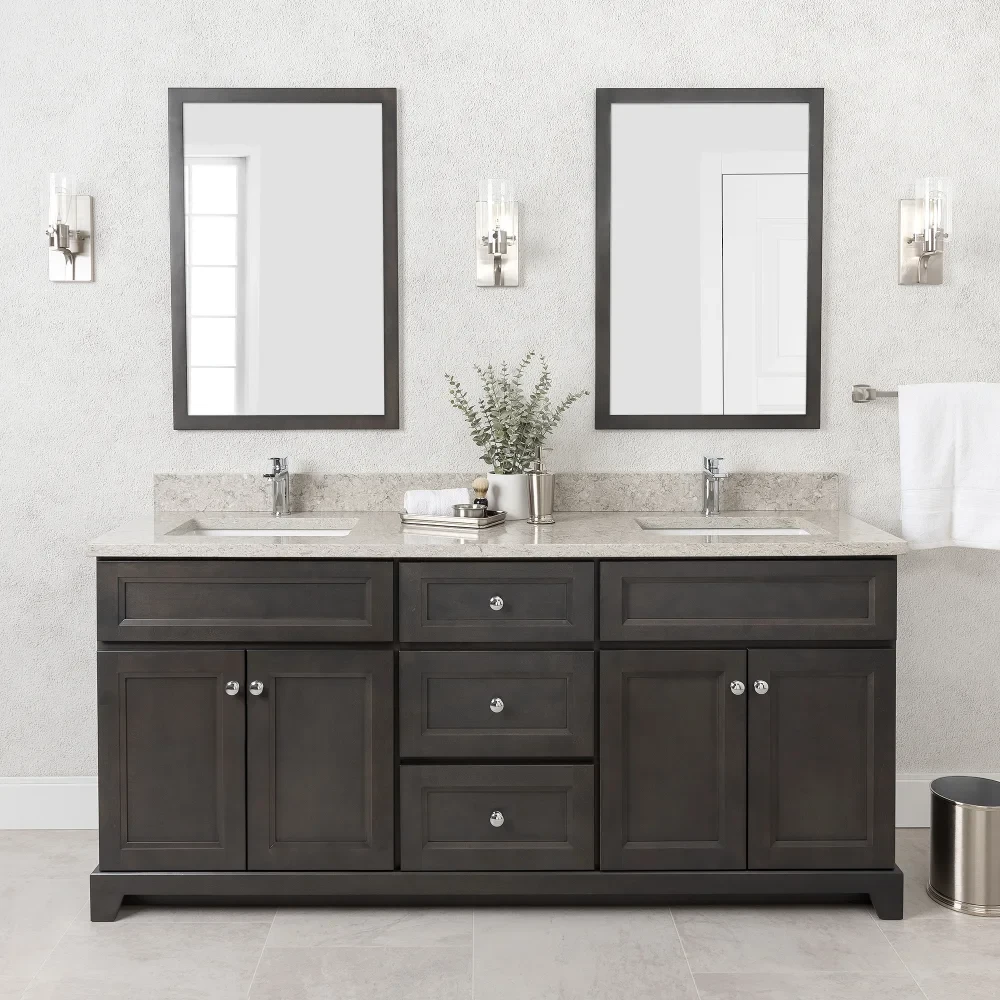
Rock Solid Vanities provides the perfect combination of style and durability with our premium quartz collections and semi-custom vanities. Use our Dealer Locator to find a nearby showroom and start your bathroom transformation today.
Frequently Asked Questions
Below, we address and answer some commonly asked questions about sandstone vs quartz countertops.
Can quartz countertops mimic the look of sandstone?
Yes, modern manufacturing allows quartz to mimic natural stones like sandstone. However, quartz offers consistency in pattern and superior durability without the maintenance demands of natural sedimentary rock.
Why does Rock Solid Vanities recommend quartz tops?
We recommend quartz tops for their balance of aesthetics and practicality. Our 1¼” thick quartz tops are non-porous and resist stains and water damage without sealing, ensuring a product that looks great and lasts.
How does the weight of sandstone compare to quartz during installation?
Quartz is denser and often heavier than sandstone, requiring a sturdy cabinet base for support. This is why we ensure our vanities are constructed with durability in mind, capable of supporting the substantial weight of our 1¼” premium quartz tops. Professional installation is recommended for both materials due to the weight and precision required.
Do quartz or sandstone countertops require special edge profiles?
Quartz is highly versatile and can be fabricated into intricate edge profiles without chipping. Sandstone, due to its sedimentary layers and granular nature, can be brittle; it is better suited for simpler, eased edges to prevent the layers from separating or flaking. When selecting your vanity, consider that quartz offers more design flexibility for custom edge details.