
Slate and quartz are both popular countertop materials, but they are very different in how they are made, how they look, and how much care they require. If you are planning a bathroom remodel and trying to decide between the two, this guide gives you a clear, side-by-side breakdown to help you make the right choice.
What Makes Slate and Quartz Countertops Fundamentally Different
Understanding the core differences between these two materials is the first step toward making a confident decision. The table below compares slate and quartz across the six factors that matter most to homeowners.
| Feature | Quartz | Slate |
| Origin | Engineered material made from 90 to 95 percent ground quartz minerals mixed with resin and pigments | Natural metamorphic rock formed from clay and silt under extreme heat and pressure over millions of years |
| Appearance | Consistent color and pattern across every slab; available in a wide range of colors including whites, grays, and bold tones | Natural, earthy tones in dark gray, charcoal, green, and black; each slab has unique texture and variation |
| Durability | Highly resistant to scratching, chipping, and staining under normal use; resin can be damaged by prolonged direct heat | Extremely hard and dense; resistant to scratching, but edges can chip if impacted; handles heat well |
| Maintenance | Non-porous, never needs sealing; clean with mild soap and water; no special products required | Non-porous but benefits from periodic application of slate oil to preserve color and texture; edges need care |
| Heat Resistance | Moderate; direct heat from styling tools or hot pots can damage the resin in the surface | High; handles heat from cookware and styling tools better than quartz |
| Cost | Typically $50 to $150 per square foot installed depending on grade, color, and edge profile | Typically $50 to $100 per square foot installed; generally more affordable but varies by region and slab quality |
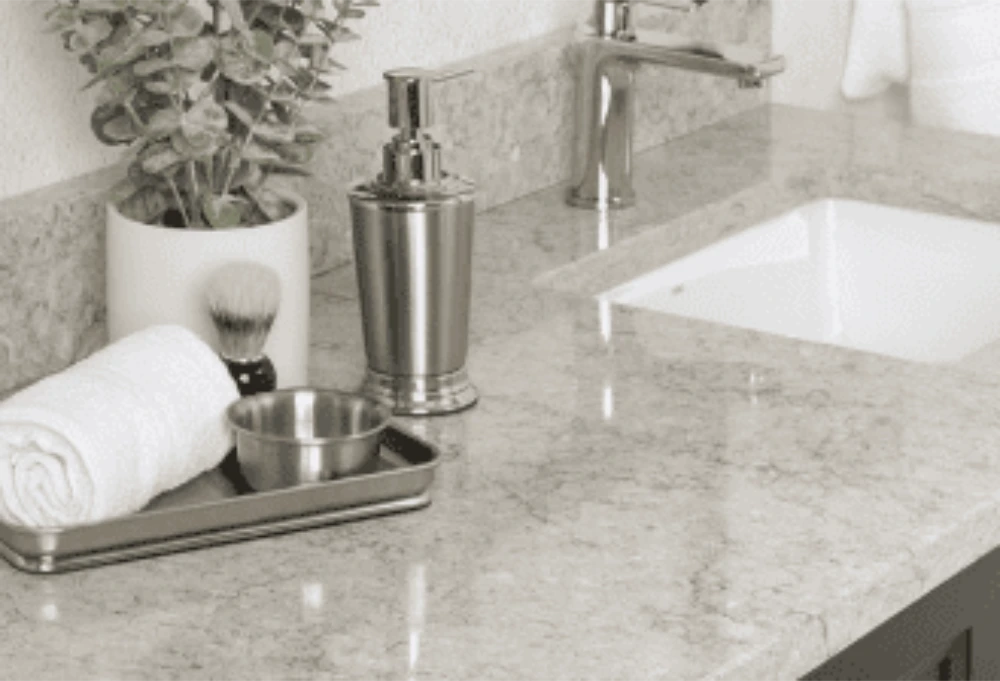
Rock Solid Vanities quartz vanity tops are engineered for consistency in color, pattern, and surface quality across every slab.
Breaking down the key takeaways:
Quartz is an engineered product, which means every slab is manufactured to be consistent. You get predictable color, uniform pattern, and a surface that behaves the same way regardless of which piece you purchase. This makes it easier to plan a bathroom design around a specific aesthetic.
Slate is quarried directly from the earth, so no two pieces look exactly alike. Its natural texture and dark, earthy tones give bathrooms a grounded, rustic character that engineered materials cannot fully replicate. However, that natural origin also means more variability in quality and more care required to maintain its appearance over time.
For bathroom vanity countertops specifically, quartz has a clear practical advantage. Bathrooms involve daily exposure to water, soap, toothpaste, makeup, and cleaning products. A non-porous surface that requires no sealing and cleans easily with basic household products is significantly easier to manage in that environment. Slate can work in a bathroom, but it requires more attention to keep it looking its best, particularly around the edges where chipping is more likely.
5 Tips before making the decision on Slate or Quartz Countertops
Choosing between slate and quartz is not just about which material looks better. It comes down to how you use your bathroom, how much time you want to spend on upkeep, and what your long-term budget looks like. These five tips will help you think through the decision clearly before committing to a purchase.
- Think about how much maintenance you are willing to do. Quartz requires almost no ongoing maintenance beyond regular cleaning. Slate benefits from periodic slate oil application to preserve its color and protect the surface. If a low-effort surface is important to you, quartz is the more straightforward choice.
- Consider where the countertop will be installed. For bathroom vanities, quartz is the stronger option due to its moisture resistance and stain resistance. For kitchen countertops where heat from pots and pans is a regular concern, slate’s higher heat tolerance gives it an advantage.
- Match the material to your design goals. Quartz is available in a wide range of colors and finishes, including options that replicate the look of marble or granite. Slate offers a natural, textured aesthetic in darker tones that works well in rustic, industrial, or earthy bathroom designs. Choose the material that fits the overall look you are trying to achieve.
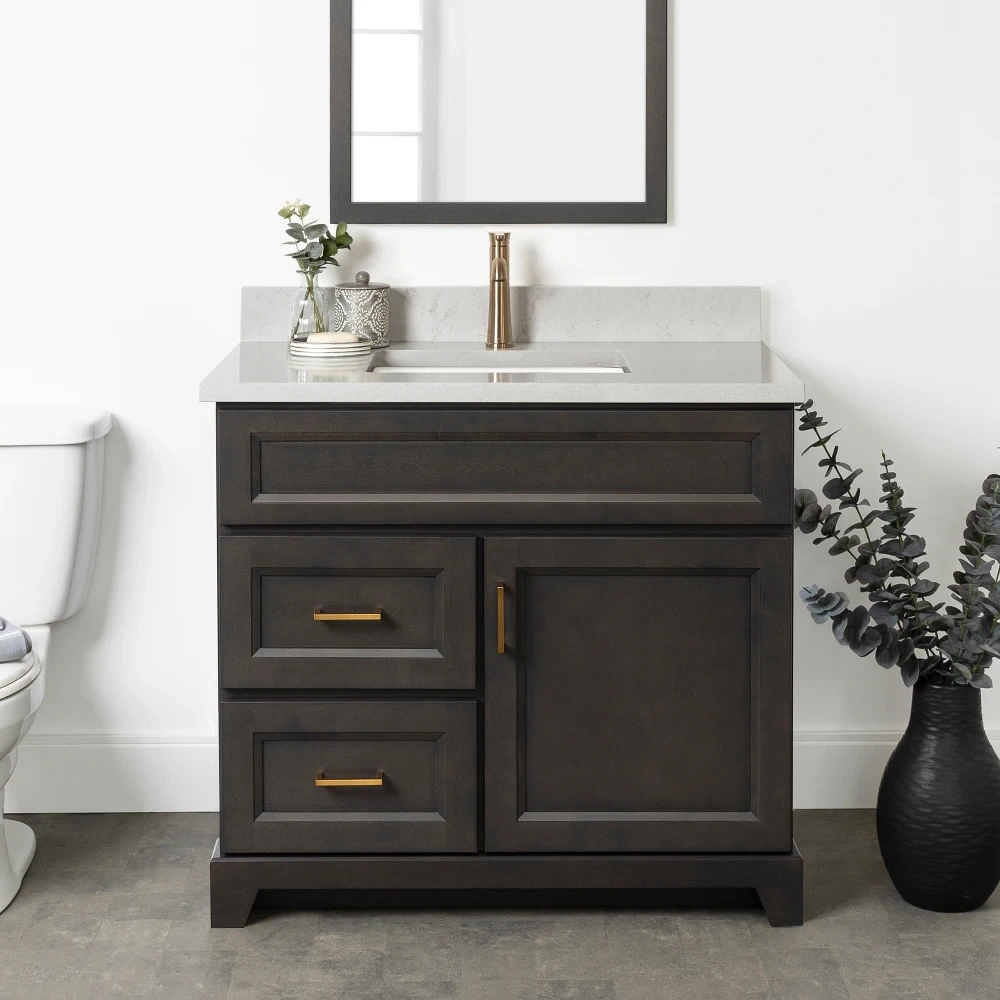
The 36″ Lakewood vanity with Shale quartz top, a soft gray finish that suits both modern and transitional bathroom designs.
- Set a realistic budget including installation. Slate is generally more affordable upfront, but factor in the cost of edge finishing and any long-term maintenance products. Quartz may cost more initially, but the absence of sealing and special care products can make it more cost-effective over time.
- Visit a showroom before deciding. Colors and textures look different in person than they do on a screen. Viewing physical samples under your bathroom’s lighting conditions gives you a much more accurate sense of how the material will look once installed.
Find Your Perfect Quartz Vanity Top at Rock Solid Vanities
Rock Solid Vanities offers a curated selection of hand-crafted, semi-customizable bathroom vanities that pair beautifully with quartz countertop surfaces. RSV vanities are built with premium finishes, soft-close drawers, and durable construction designed for everyday bathroom use.
Find a Dealer Near You at rocksolidvanities.com
Use the Dealer Locator on the Rock Solid Vanities website to find an authorized showroom near you and see the full collection in person.
Frequently Asked Questions About Slate and Quartz Countertops
Is slate good for bathroom countertops?
Slate can work in a bathroom, but it requires more maintenance than quartz. It benefits from periodic slate oil application and the edges need careful handling to prevent chipping. For busy bathrooms with daily use, quartz is generally the more practical option.
Does quartz need to be sealed in a bathroom?
No. Quartz is non-porous by nature and never requires sealing. This is one of its biggest advantages for bathroom use, where surfaces are exposed to moisture and cosmetics on a daily basis.
Which is more scratch-resistant, slate or quartz?
Both materials are highly scratch-resistant under normal use. Slate is a very hard natural stone, but its edges can chip with impact. Quartz holds up well against everyday scratching from bathroom items.
Can I use slate in a kitchen instead of a bathroom?
Yes. Slate performs particularly well in kitchens because it handles heat better than quartz. If you prefer a natural stone with heat resistance and are comfortable with periodic maintenance, slate is a reasonable choice for kitchen countertops.